
 By
By 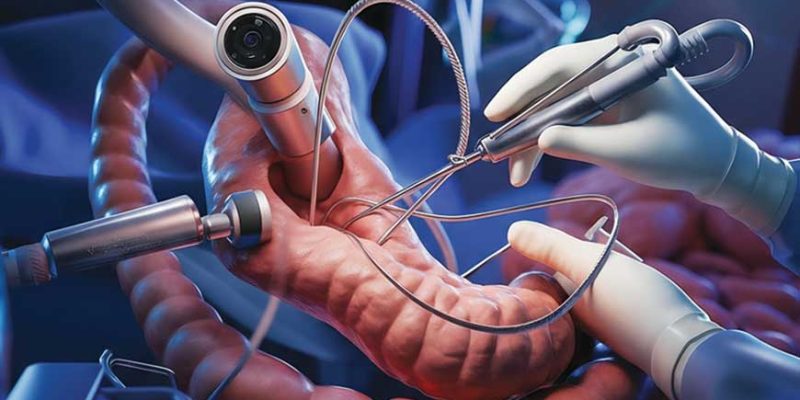
AMT endoscopy demands a level of engineering precision that most industrial sectors never approach, and the stakes that make that precision necessary are not abstract. When a therapeutic endoscope fails during a procedure, the failure does not occur in a testing laboratory. It occurs inside a patient. The clip that does not deploy, the working channel that collapses under instrument pressure, the imaging system that loses clarity at the critical moment of tissue assessment: each represents a failure of engineering translated directly into clinical risk. Understanding the expertise required to prevent those failures, and the systems that capable producers build to sustain it at production scale, is the subject that matters.
The Engineering Challenge at the Core of AMT Devices
Advanced minimally invasive therapeutic endoscopy instruments are among the most complex flexible medical devices in regular clinical use. Their engineering challenge is not any single difficult requirement but the simultaneous satisfaction of requirements that pull against each other. The insertion tube must be flexible enough to navigate the acute bends of the gastrointestinal tract, yet stiff enough to transmit the push and torque forces that allow the operator to advance and steer it. The working channel must be large enough to accept therapeutic instruments, yet the overall outer diameter must remain small enough to pass through the oesophagus or colon without causing unacceptable patient discomfort.
The optical system must deliver high-definition images in a space measured in millimetres. The articulation mechanism must respond precisely to handle controls after the instrument has been subjected to repeated cycles of bending, cleaning, and high-level disinfection. And the entire assembly must meet biocompatibility requirements, electrical safety standards, and sterility specifications before it reaches a clinical environment.
AMT endoscopic devices are the output of engineering expertise accumulated over years of design iteration, clinical feedback, and manufacturing process development.
Materials Engineering and Component Specifications
The material choices in advanced therapeutic endoscopy devices are constrained from multiple directions simultaneously. Biocompatibility requirements, defined by ISO 10993, limit the polymer and metal grades available for components that contact patient tissue or fluids. The mechanical properties required for flexible insertion tubes favour braided constructions of stainless steel wire within polymer jackets. The optical performance of chip-on-tip imaging systems depends on sensor technology, lens specification, and illumination design that must all function within a diameter of less than thirteen millimetres.
Single-use accessory components, including biopsy forceps jaws, injection needle tips, and haemostatic clip elements, are frequently produced through metal injection moulding. This process delivers the complex geometries and tight dimensional tolerances these components require in stainless steel, cobalt-chrome, and titanium alloys at the production volumes that disposable device economics demand. Conventional machining of individual components cannot match the cost or geometric capability of MIM at scale.
Polymer extrusion produces the multi-lumen catheter bodies and flexible sheaths that give endoscopic accessories their physical form. Wall thickness tolerances are measured in hundredths of a millimetre. Variation beyond those limits affects mechanical performance and the accessory’s ability to pass through the working channel without the friction that disrupts procedural flow.
Quality Systems That Govern Production
The quality infrastructure surrounding amt endoscopy manufacturing is the mechanism through which engineering specifications are translated into consistent production outcomes.
ISO 13485 certification is the foundation. It requires documented process controls, validated manufacturing methods, and a post-market quality system that connects production records to the clinical performance of distributed devices. For facilities supplying the United States market, FDA 21 CFR Part 820 adds requirements for design history files and device master records. EU MDR conformity, assessed by a notified body, imposes the most demanding clinical evidence requirements in any major market.
The quality controls that directly govern therapeutic endoscopy device production include:
Process validation
Documented evidence that manufacturing processes consistently produce conforming output under defined conditions, required before any batch intended for distribution is produced
Incoming material inspection
Verification that raw materials and components meet specification before entering production, with records linking each lot to the finished devices in which it was used
Environmental monitoring in cleanroom assembly
Continuous or periodic measurement of airborne particle counts, viable microbial contamination, and differential pressure in classified assembly environments
Final device testing
Functional, dimensional, and integrity testing of finished devices against defined acceptance criteria, with full batch traceability
Corrective and preventive action systems
Documented investigation of non-conformances, root cause analysis, and verified effectiveness of implemented corrections
Singapore’s Role in AMT Endoscopy
Singapore has developed a recognised capability within AMT endoscopy supply chains, contributing both precision component manufacturing and sub-assembly production to device programmes serving global markets. Its manufacturers supply MIM components, extruded polymer elements, and cleanroom-assembled sub-assemblies to advanced therapeutic endoscopy programmes across Asia Pacific, North America, and Europe.
Its ISO 13485 certified facilities, precision metrology capability, and technically trained workforce make it a viable single-source location for programmes requiring multiple production stages within one quality management framework. Singapore’s Health Sciences Authority oversight, aligned with international device standards, provides compliance assurance for customers whose qualification processes include country-of-manufacture regulatory standing.
Expertise as a Production Requirement
In any complex regulated manufacturing sector, capability is what equipment and processes can do under optimal conditions. Expertise is what the organisation knows about managing them under variable real-world conditions: how to respond when results drift, how to investigate a non-conformance affecting multiple batches, how to manage a supplier change without compromising a validated supply chain.
In a field where product failures have clinical consequences and regulatory sanctions are severe, expertise of that kind is not a commercial differentiator. It is a patient safety requirement. Building and sustaining it, across every production stage and every quality system element, is the central engineering and organisational challenge of amt endoscopy.











Comments